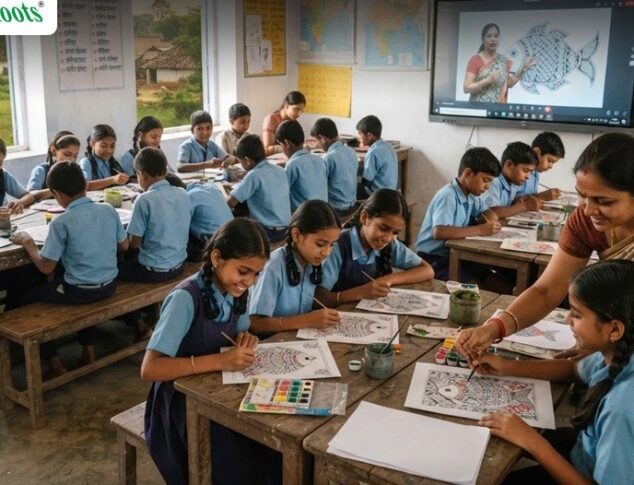





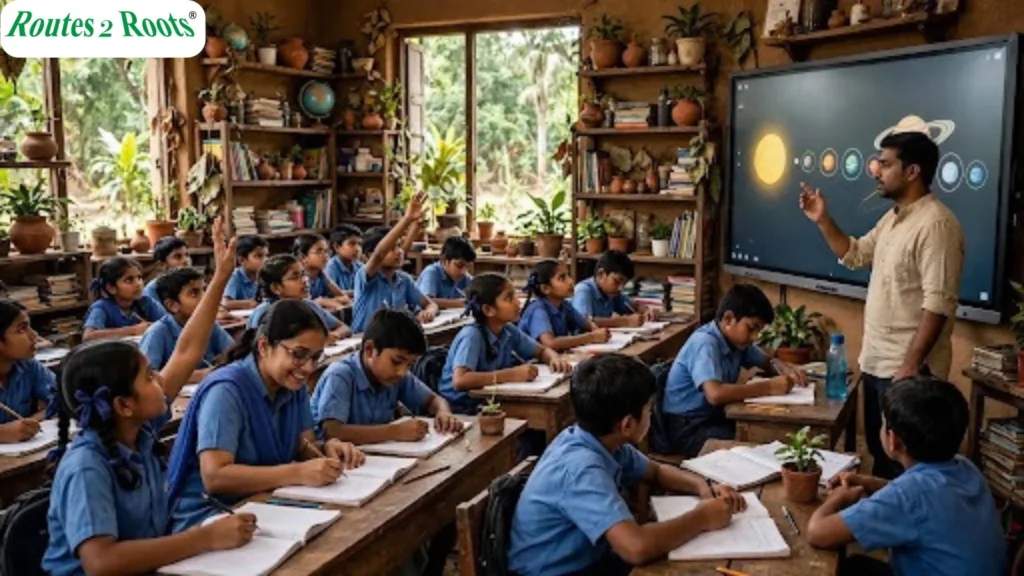
Children from all backgrounds deserve equal educational opportunities. In fact, the UN Convention on the Rights of the Child guarantees children’s right to education. That’s why it is important not to judge the quality of education by the place a student lives. But children in remote areas of the country still have very limited access to good schools, education, and technology because of the lack of infrastructure and shortage of teachers.
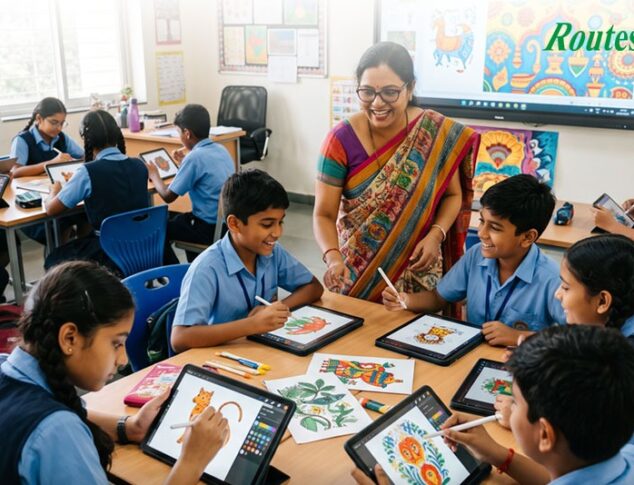
Digital education is another important initiative by NGOs for these underprivileged children to make education more accessible. These digital schools not only teach in a modern, multimedia way but also provide teachers with tools for creating their own content, developing interactive lessons, and managing students via digital devices.
The Growing Need for Digital Learning in Rural Communities
India has come a long way in increasing educational accessibility yet challenges due to geographical and infrastructure-related reasons are still hampering academic achievement in the most sparsely populated rural areas and those remote communities that are barely connected.
Even in these places where the schools manage to get the committed instructors and passionate students, it is sometimes still the case that they are in short supply of the latest resources and instruction, which takes specialized skills and innovative learning formats.
Precisely, this is why digital learning is a very useful intervention strategy, at least for the rural communities: technological equipment can greatly assist the classroom learning by exposing educators to videos, visual descriptions, interactive multimedia content, and all other types of resources that can transform lessons into dynamic events.
Digital education though should not be simply interpreted as computers or screens. Its true potential is realized when technology is blended with teachers, right content, teacher training, and continued support.
How NGOs Are Supporting Digital Education in Rural Areas
Many Indian organizations that “work on spreading digital education in villages” are trying different methods to increase the reach of education through technology.
Some of them set up digital classrooms with smart screens or computers, while some give digital material for learning, train the teachers, and offer digital learning platforms or develop programs tailored for areas where education resources are scarce.
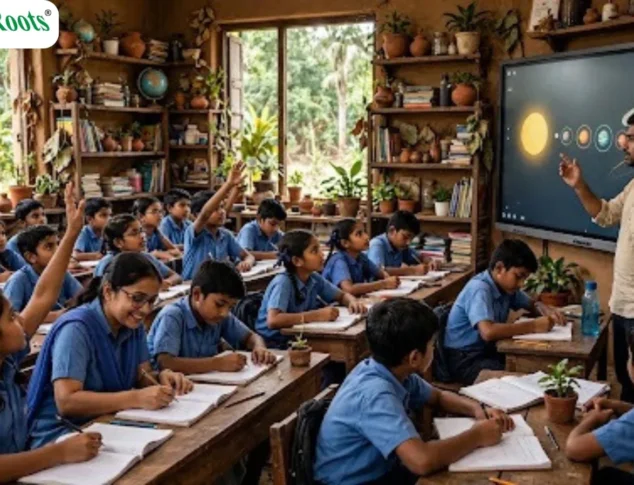
An introduction of technology in villages through education tends to be a major step for many schools through which the students will experience different subjects/lessons with a kind of learning that would otherwise be difficult to have.
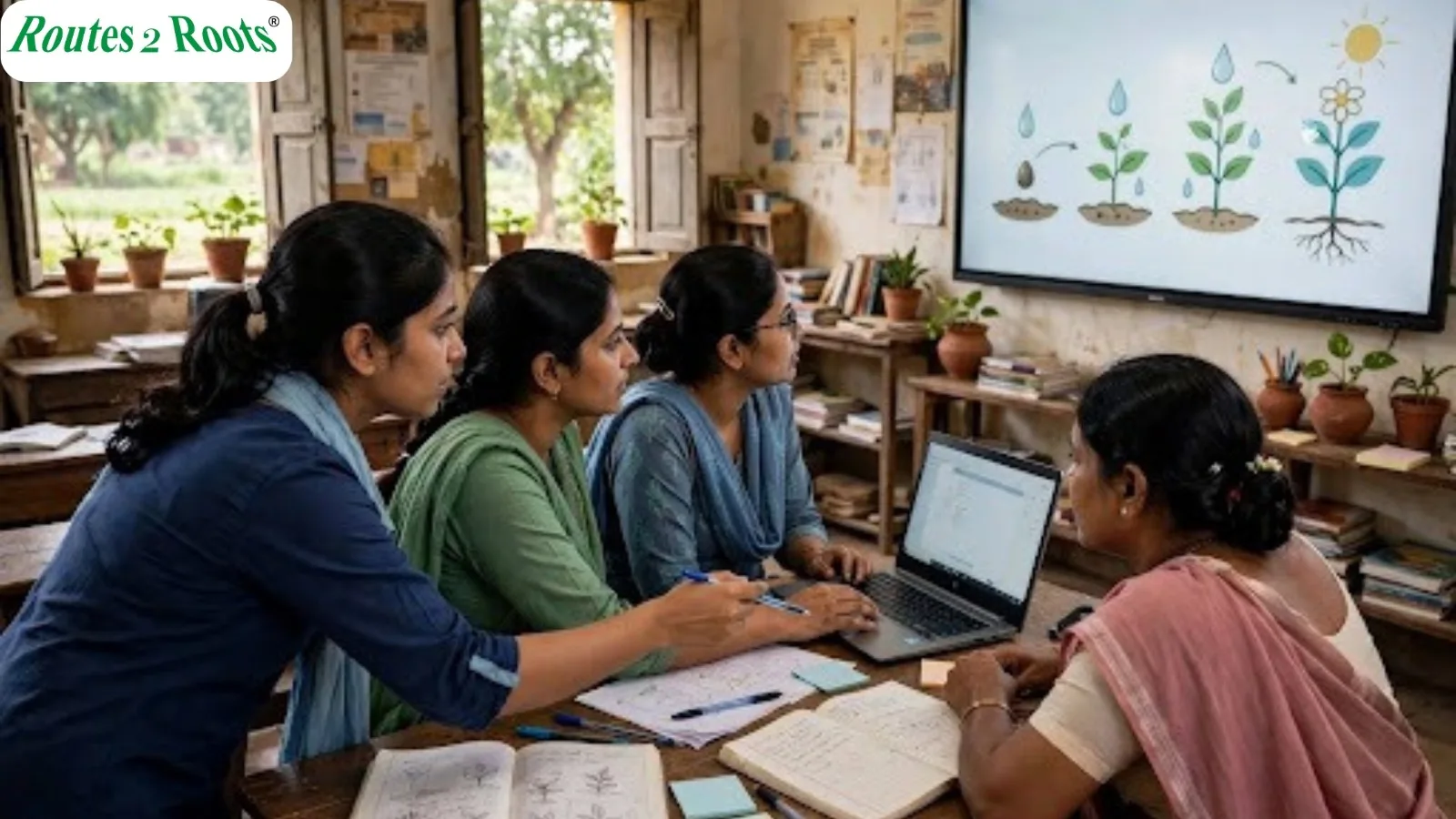
A digital teaching room brings the option for the teacher to show a scientific principle via an animation; for example, students can see a new part of the world in a visual form or a lesson can be deepened through a game.
Technology in Rural Education: More Than Just a Screen
People usually assume that technology in rural education means that technology itself will result in a better learning environment.
But it’s not the technology alone that makes learning better.
Having a smart screen displayed on a wall does not necessarily upgrade education. It takes more than just hardware.
1. Teacher’s involvement: Educators remain the heart of classroom instruction. So, educators being the first stakeholders is essential.
2. Quality content: the digital material should be aligned to the teaching program and student requirements.
3. Professional development: Educators must be able to trust themselves and develop competencies in utilizing digital tools.
4. Students’ Engagement: Technology is supposed to spark students to interact explore ask questions, and learn.
5. Technical support: beyond the initial set-up, the school should have the support staff for the equipment and learning needs.
Digital education can only be successful if all these factors are properly coordinated. Digital tools will then be considered as a resource for extending classroom teaching, rather than as an alternative method for the conventional way of teaching.
Making Digital Education More Inclusive
For “digital education for rural communities” to have a lasting impact, accessibility has to remain at the centre of implementation.
This means considering factors such as internet connectivity, electricity, device availability, language, digital skills, and the specific needs of individual communities.
NGOs can help bridge some of these gaps by working directly with schools and communities, partnering with institutions, providing infrastructure, and creating programs that make technology easier to adopt.
Their role is particularly important in areas where schools may not have the same resources or exposure to emerging educational technologies as institutions in larger cities.
Building Digital Literacy in Rural India
Digital education involves technology to aid learning of basic subjects, but its scope is more than that as it could be a means to familiarise students with computers and computers usage itself.
Introducing the concept of digital literacy at the grass root level in India can help children feel secure with using digital devices to access information online, communicate with others electronically, and also familiarise themselves with modern tools that are becoming important at the college level and among the working population.
If young minds get an early taste, then it may also nurture a kind of interest in the latest fields and potential careers.
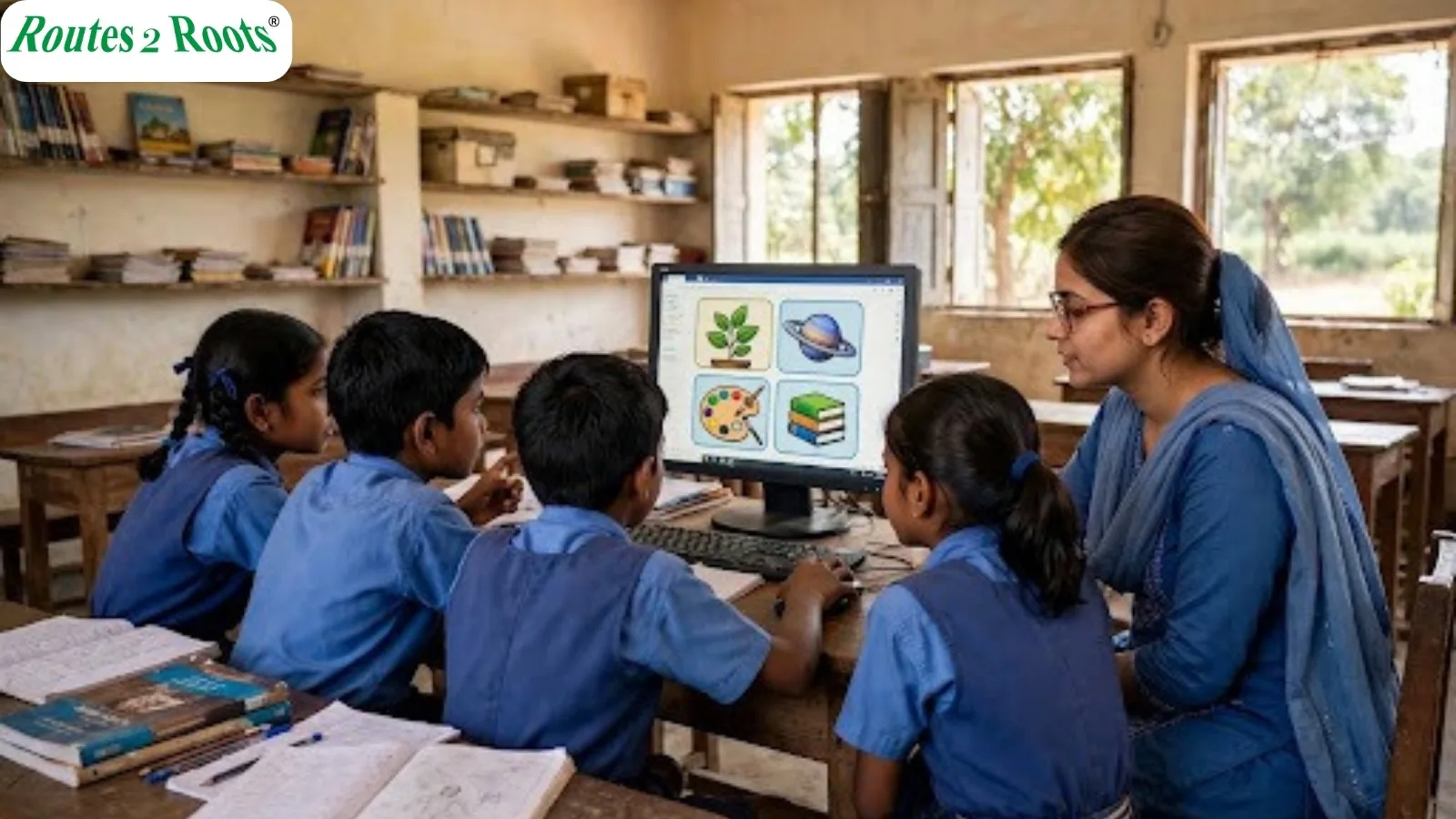
The aim is never to make every kid a tech expert. The effort is more on guaranteeing that physical location would no longer block the development of the necessary digital capabilities.
Bringing More Learning Opportunities to Students
One of the most important advantages of “digital learning programs in rural India” is their ability to expand what can happen inside a classroom.
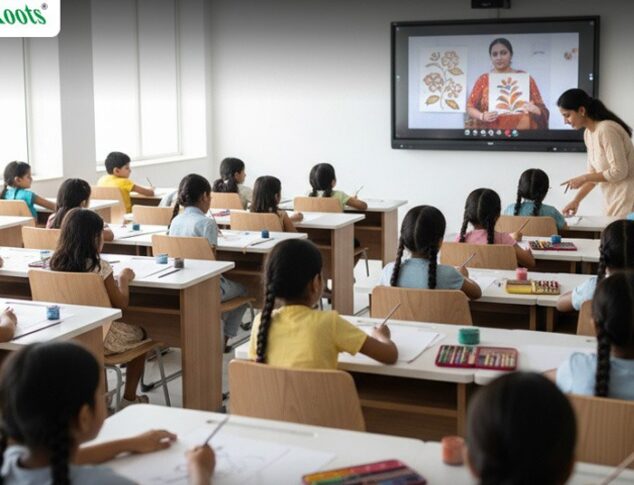
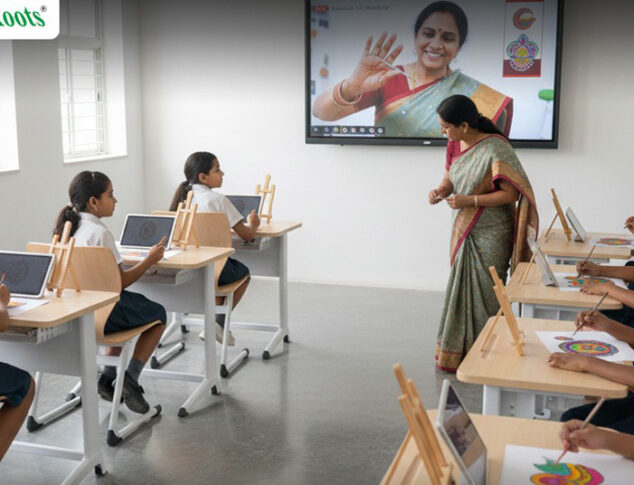
A student in a remote school can potentially access educational videos, visual demonstrations, digital libraries, cultural programs, expert-led sessions, and other resources without having to travel to a major city.
This does not eliminate the importance of physical classrooms or teachers. Instead, it expands the resources available to them.
For NGOs, this creates an opportunity to use technology as a bridge—connecting students and educators with knowledge, experiences, and possibilities that may otherwise remain out of reach.
The Role of NGOs in the Future of Rural Education
Besides improvements in infrastructure, future rural education also takes a partnership among school heads, teachers, government officials, community stakeholders, tech providers, and ground workers.
A partnership that “gives digital education through NGOs” can do much to understand on-the-ground local challenges, formulate workable programs, empower teachers, introduce suitable digital tools, and ensure, at any given time, technology-based education is student-centered.
These cooperative efforts may well help to keep rural and remote communities in India on the digital grid as the country keeps building its digital infrastructure.
Conclusion
Digital learning has the potential to make education more accessible, engaging, and inclusive, but technology is only one part of the solution.
When digital tools are combined with committed teachers, relevant content, infrastructure, and sustained support, they can open new doors for students in communities that have traditionally faced greater barriers to educational resources.
The goal of digital learning in rural communities should ultimately be simple: to give every learner the opportunity to access knowledge, develop new skills, and imagine possibilities beyond their immediate surroundings.